 Jinan Alston Equipment Co.,Ltd.
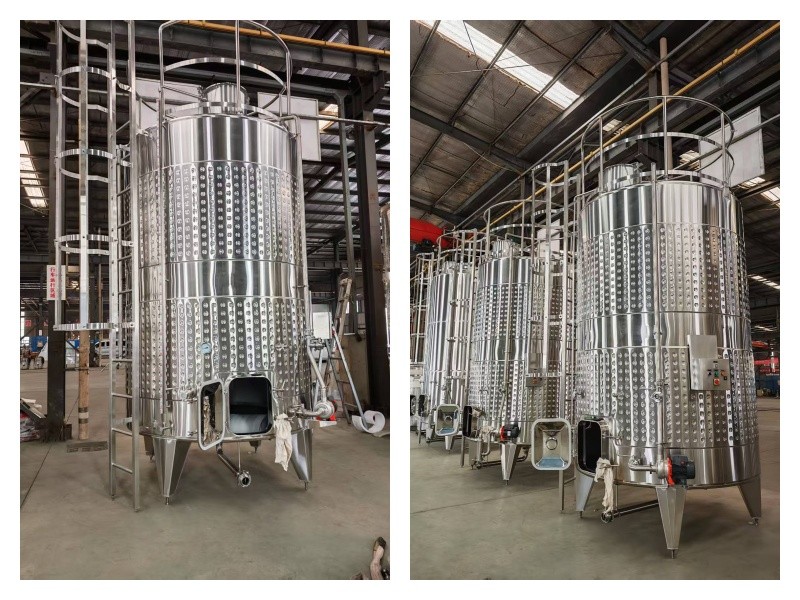
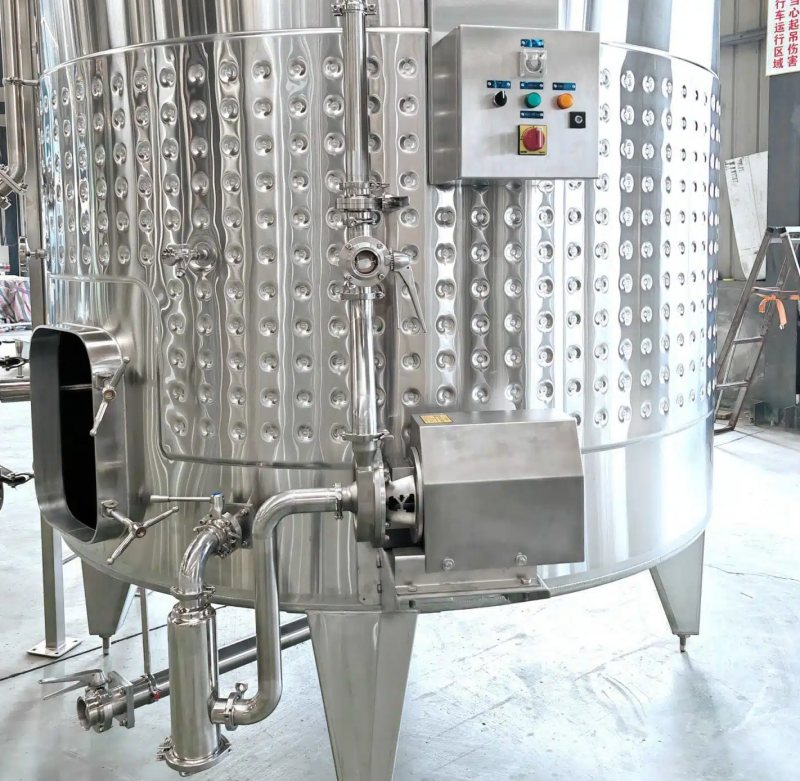
Pump-over Wine Fermenter Tank
Pump-over wine fermenter, also known as a“remontage”system, is a method used in winemaking to manage the fermentation process, particularly for red wines. This technique involves pumping the wine from the bottom of the fermenter over the top of the fermenting must (the mixture of grape skins, seeds, and juice) to keep it moist and ensure good extraction of color, tannins, and flavors from the grape skins.
Main Feature of wine tanks
1. Optimized for Yeast Activity: Oxygen & Temperature Control Priorities
This is the foundation of every fermentation tank. Unlike storage tanks (which minimize oxygen), fermentation tanks are designed to allow controlled oxygen exposure in the early stages (yeast needs a small amount of oxygen to multiply and kickstart fermentation)
Red wines ferment best at 22–28°C (72–82°F) (warmer temps extract more color, tannins, and flavor from skins).
White wines ferment best at 10–18°C (50–64°F) (cooler temps preserve delicate floral/fruity aromas and prevent harsh flavors).
Most models have integrated temperature probes and digital controls for hands-off monitoring—no more manually checking with a thermometer!
2. Bottom Drain Valves for Easy Transfer & Cleanup
Fermentation tanks have large, heavy-duty bottom drain valves (bigger than storage tank valves) that are designed for two critical tasks:
Transferring finished wine: After fermentation is complete, the clear wine can be easily drained from the bottom of the tank (once sediment has settled) to a storage tank or bottling line. The valves are placed at the lowest point of the tank to maximize wine recovery (95–98% of the batch).
Cleanup: After transferring the wine, the remaining grape skins, seeds, and sediment (called pomace) can be quickly drained from the bottom valve—no need to manually scoop it out through the manway (which is messy and time-consuming). Most valves are ball valves or butterfly valves—easy to open/close and clean.
3. Versatile for Both Primary & Secondary Fermentation
While they’re called “fermentation tanks,” these tanks are incredibly versatile and can be used for both:
Primary fermentation: Turning grape juice into wine (the main job).
Secondary fermentation: Malolactic fermentation (MLF)—a secondary process that converts harsh malic acid (think green apple) into softer lactic acid (think cream or butter). This is critical for red wines and many white wines (like Chardonnay).
The cooling/heating jackets and easy-to-clean design make fermentation tanks perfect for MLF—winemakers just need to adjust the temperature to 18–22°C (64–72°F) and let the bacteria do their work. No need for a separate tank!
Detailed specification list
| Name | Specification l ist |
|
Wine fermentation and storage tanks |
1. Stainless steel 3042. plate thickness: 2.5mm,
3. Conical centric top 4. Sample valve 5. CIP – rotary spray ball 6. Wine outlet and drain outlet assembly 7. Fully welded cladding 8. Top Manhole Cover 9. Side rectangular manway 10. with cooling jacket, 11. RTD Probe 12. 2″ Butterfly valves 13. Slopping flat bottom 14. 2″ PVRV 15. Ladder Rack 16. Bimetallic thermometer 17.Fixed pump attached on tank 18.Control cabinet for pump with VFD control. |